The next time a hip-height robot rolls past you carrying eight extra-large pizzas, you can thank a decade of Pokémon GO trainers. Specifically, the millions of players who spent years pointing their phone cameras at statues, fountains, murals, and battle arenas to spin Pokéstops and bag a few in-game rewards.
Those scans built one of the most detailed visual maps of the physical world ever assembled, and that map is now teaching autonomous delivery robots how to navigate city streets.
Niantic Spatial, the AI company spun out of Niantic in 2025, has trained a model on roughly 30 billion real-world images crowdsourced from Pokémon GO and its older sibling, Ingress.
It is already running on a fleet of pavement bots in cities from Los Angeles to Helsinki, and the implications stretch from food delivery to AR glasses to anything else that needs to know where it is when GPS gives up.
From AR Game to AI Ground Truth
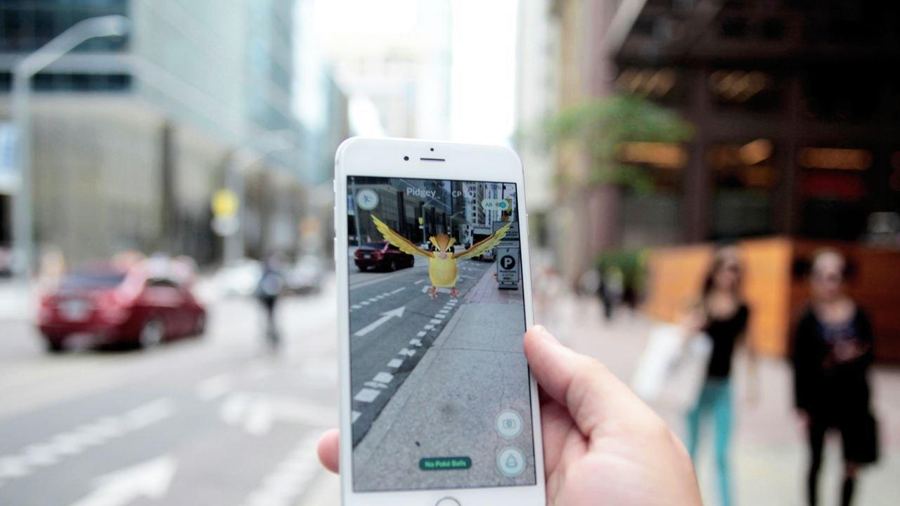
When Pokémon GO released in 2016, it hit the streets harder than any AR game before it. Within sixty days, the app had been installed half a billion times. Players walked, biked, and queued in parks to catch Pikachu, raid gyms, and spin Pokéstops at points of interest tagged to real landmarks.
What players did not necessarily know was that every spin and walk generated ground-level location data: phone orientation, direction of movement, GPS coordinates, and, eventually, with the 2020 Field Research feature, full video scans of statues and landmarks in exchange for in-game rewards.
Niantic had quietly become the operator of one of the largest crowdsourced spatial datasets on the planet, with thousands of images per landmark captured from different angles and under varying weather conditions, as MIT Technology Review reported.
A dataset like that is only useful if you have somewhere to point it.
How Niantic Spatial Repackages Pokémon GO Data
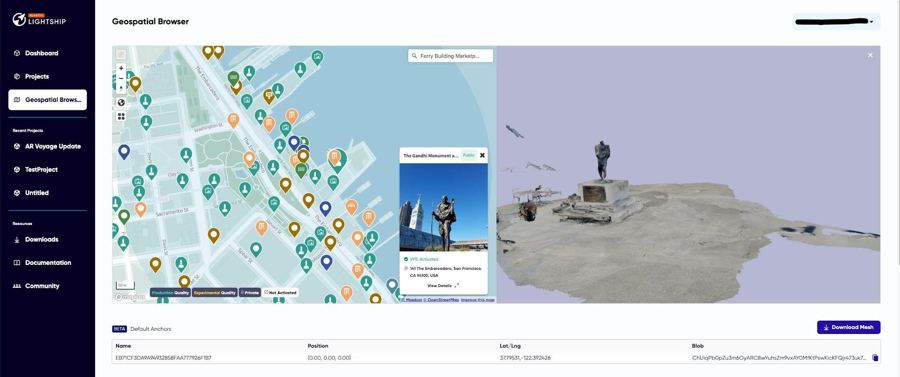
In May 2025, Niantic split itself into two. The consumer game studio, including Pokémon GO, was sold to Scopely for around $3.85 billion. The remaining team kept Ingress and Peridot and rebranded as Niantic Spatial, an enterprise AI company built around what the industry calls a large geospatial model.
Think of a large geospatial model as the spatial counterpart to a large language model. While ChatGPT understands the structure of language, Niantic Spatial's platform is designed to understand the structure of space: where a wall sits relative to a curb, which side of a building has a loading dock, and how a fountain looks at noon versus dusk in November.
The headline product is the Visual Positioning System, or VPS. Instead of asking a satellite where you are, VPS compares a live camera feed against a 30-billion-image database and pinpoints your position using buildings and landmarks within a few centimeters.
CTO Brian McClendon has called the player-generated images “very high-quality ground training data” that lifts the accuracy of every other dataset they fold in. John Hanke, who co-founded Niantic and now runs Niantic Spatial, frames the work in his recent post on the large geospatial model as building a living map that is native to robots and AI rather than to humans reading a screen.
| Metric | Figure |
|---|---|
| Real-world images in the dataset | 30 billion |
| Mapped locations worldwide | 1 million+ |
| Coco Robotics fleet size | ~1,000 robots |
| Deliveries logged to date | 500,000+ |
| Positioning accuracy | Within a few centimeters |
| Cities with active deployments | 5 |
How Pokémon GO Data Helps Robots Find Their Way
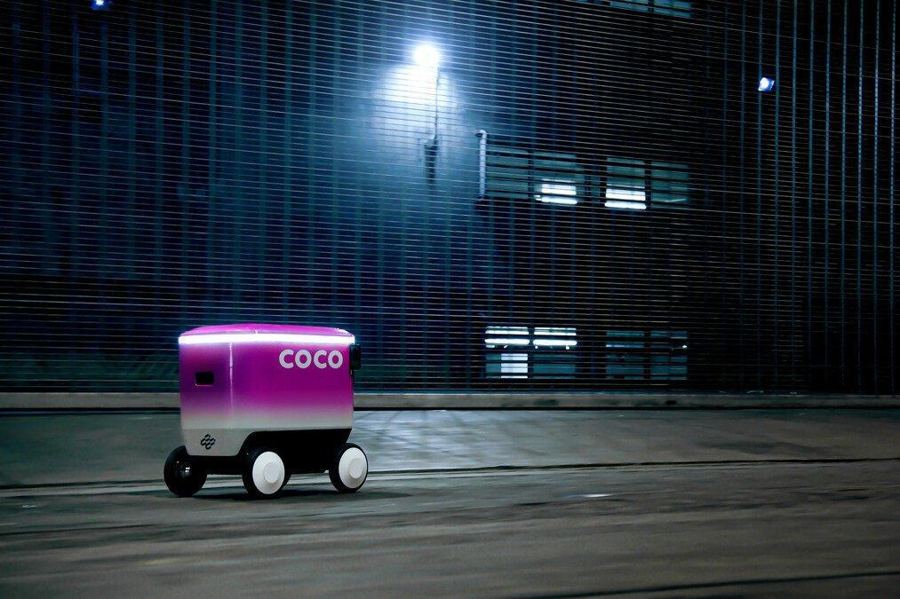
The reason any of this matters to a pizza is that GPS does not work well in the parts of a city where most pizzas get delivered. Tall buildings bounce satellite signals, underpasses block them outright, and dense neighborhoods routinely place a robot ten feet off-course. As Coco Robotics CEO Zach Rash told Fortune, robots cannot intuit “my GPS is wrong, but I know that’s the right corner” the way a human can.
Coco’s flight-case-sized bots, equipped with four hip-height cameras pointed in every direction, lean on Niantic Spatial’s VPS to fill in the gaps. The robots run last-mile deliveries in Los Angeles, Chicago, Miami, Jersey City, and Helsinki, carrying up to eight extra-large pizzas or four grocery bags at a sidewalk-friendly five miles per hour. They have logged more than half a million deliveries and several million miles in every weather condition you can name, according to Niantic Spatial’s product notes on VPS.
That track record is also a quiet vindication of a long-running argument inside Niantic: that consumer data, collected with consent and the right incentives, can build geospatial infrastructure that no commercial mapping team could match on its own.
How the Company Pivots Toward AI Tech and Geospatial Models
Niantic Spatial’s bet is that real-world AI vision models will be everywhere in five years. On robots. On AR glasses. On autonomous vehicles. Even on remote inspection, drones are picking their way through power substations. The company is already pitching the platform to XR device makers and signing logistics customers beyond Coco, with the underlying argument that any system that needs to see requires a map that a satellite cannot provide.
For Pokémon GO players, the practical takeaway is that the data engine still runs. Field Research tasks, route scanning, and Pokéstop submissions continue to feed the model, with Scopely now operating the consumer side of the game and Niantic Spatial taking the spatial outputs.
And, for players who want to skip the years of grind and jump into the higher-level scanning meta, picking up a pre-leveled Pokémon GO account from a third-party marketplace, since route submissions and many of the more interesting Field Research tasks only really open up well past the early trainer levels.
The bigger picture is that Pokémon GO has quietly become one of the most consequential crowdsourced data projects of the last ten years. The game still spawns Pikachu in your local park. It also taught a robot how to find your front door.
🔙 Back to Articles list.