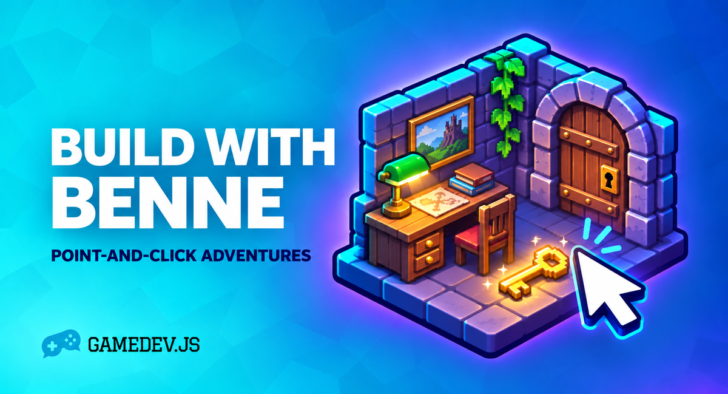
BENNE brings point-and-click adventures to Phaser 4
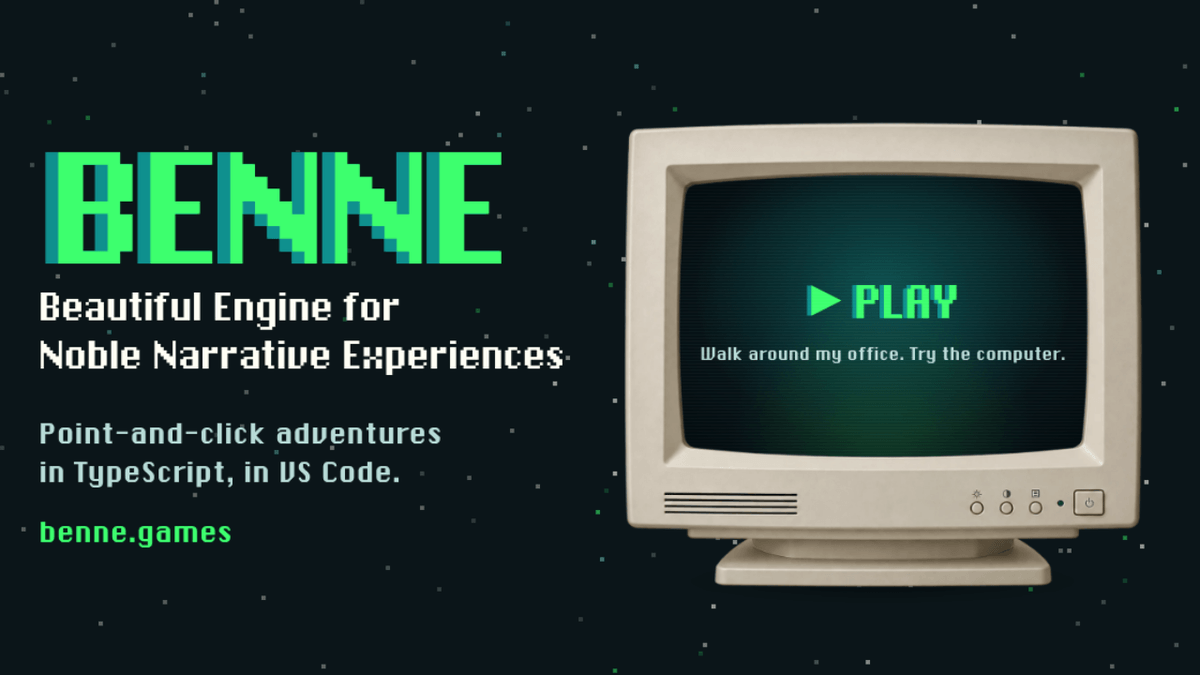
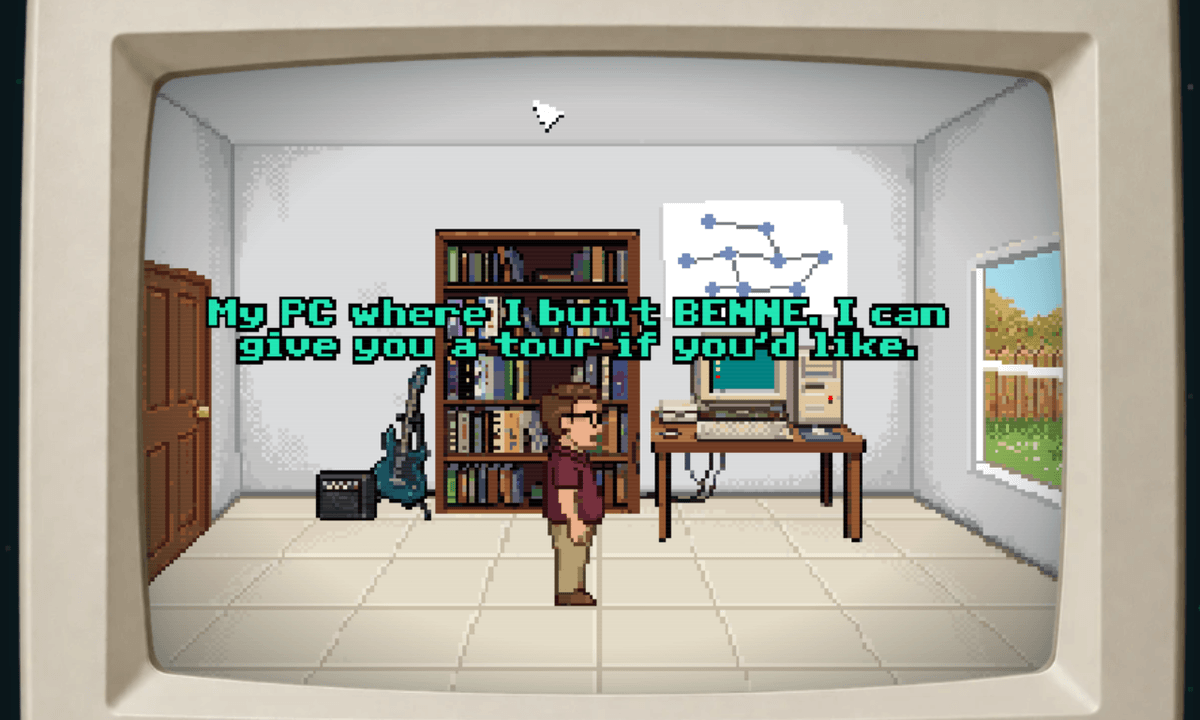
If your next game involves inspecting a suspicious cupboard, talking your way past a guard, or finding an unlikely use for an inventory item, BENNE might save you some groundwork. Bennethon’s adventure engine combines Phaser 4, TypeScript, and a Vite workflow with tools for rooms, characters, dialogue, and inventory.
Phaser’s introduction connects it to Hank Steele and the AI Apocalypse, an adventure made in 14 days for a game jam. BENNE is available under the MIT licence, with a playable demo and documentation to explore before committing a project to it.
A focused way to build an adventure
The BENNE introduction describes a deliberately specific workflow: Aseprite sprite sheets, bitmap fonts, low internal resolutions, and polygon-based walkable areas and hotspots. Those choices suit retro adventures, but they are also worth checking against the art and interface you want to make.
An engine that already understands rooms and inventory can remove a considerable amount of setup. It still leaves the interesting design work with you. Where does the player learn that an object matters? What changes after a conversation? Can a puzzle be solved in a different order without breaking the story?
Start with a room that contains one character, one useful object, and one exit. Give each interaction a response, including the unsuccessful attempts. That small scene will reveal whether the authoring workflow suits you more quickly than importing an entire folder of backgrounds.
For readers coming from our Build it with Phaser challenge, the underlying technology will be familiar. BENNE adds conventions for a particular genre on top of that foundation.
Scenes you can read and test
BENNE’s scripting model lets actions such as walking, speaking, and waiting complete in sequence. Its Visual Studio Code extension supplies live previews and editing tools, including a way to start testing from a particular room. Content names are typed and autocompleted, helping connect scripts to the objects they reference.
That room-level testing is especially relevant to puzzle games. Walking through the opening ten minutes every time you change one interaction soon makes experimentation expensive. Keep a few useful test situations ready: the player arriving without an item, returning with it, and revisiting after the puzzle has been solved.
Write down the facts that each puzzle changes. A door being unlocked, a character trusting the player, and an item leaving the inventory are separate pieces of state. If you can explain those transitions clearly, you have a better chance of spotting contradictions before someone finds them in a saved game.
Our earlier Phaser Launcher overview covers a different approach to getting Phaser projects started. Compare tools by the work you expect to repeat, rather than by how impressive their feature lists look side by side.
Export early, even for a tiny prototype
The publishing guide documents separate browser and Windows packaging commands. The browser workflow produces an itch.io ZIP with the entry file at its root and relative asset paths. It also explains how to preview the production build, which is a better hosting check than opening an HTML file directly from disk.
Put a rough version online while the project is still small. Ask a tester to reach the exit without help, then ask what they thought each object was for. If the interaction depends on reading your mind, another animation will not explain it. Rewrite the clue, change the response, or make the important object easier to recognise.
Use the Gamedev.js Jam 2026 winners as a varied reference for how short games introduce their rules. When looking at a different genre, concentrate on the first minute: what does the game teach before it asks the player to solve anything?
BENNE’s documentation is the next stop if that first room sounds like your kind of project. Keep the initial mystery small enough to finish, and give someone else a chance to get stuck before adding the second room.

HTML5 Game Developer, Enclave Games indie studio founder, js13kGames competition creator and Gamedev.js Weekly newsletter publisher. Mozilla Tech Speaker, Gamedev.js community firestarter. Organizes meetups / workshops / hackathons in Poland, passionate about new, Open Web technologies, excited about WebXR and PWAs. Likes eating sushi and playing Neuroshima Hex.