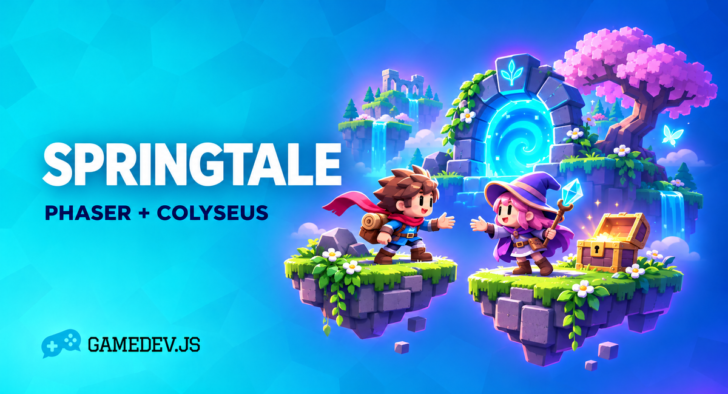
SpringTale builds a shared roguelike world with Phaser and Colyseus
A persistent online world and a character who can lose a run are an interesting combination. SpringTale, by Sydney developer Edward Vercoe, brings that combination to a 2D platformer built with Phaser and Colyseus. Phaser’s October interview with Vercoe offers a useful look at a solo project growing around an existing web-development skill set.
We have previously covered Bubbits, another game using Phaser and Colyseus. SpringTale takes those technologies in a different direction, toward exploration, changing equipment, and meeting other players during a run.
Progress that survives a failed run
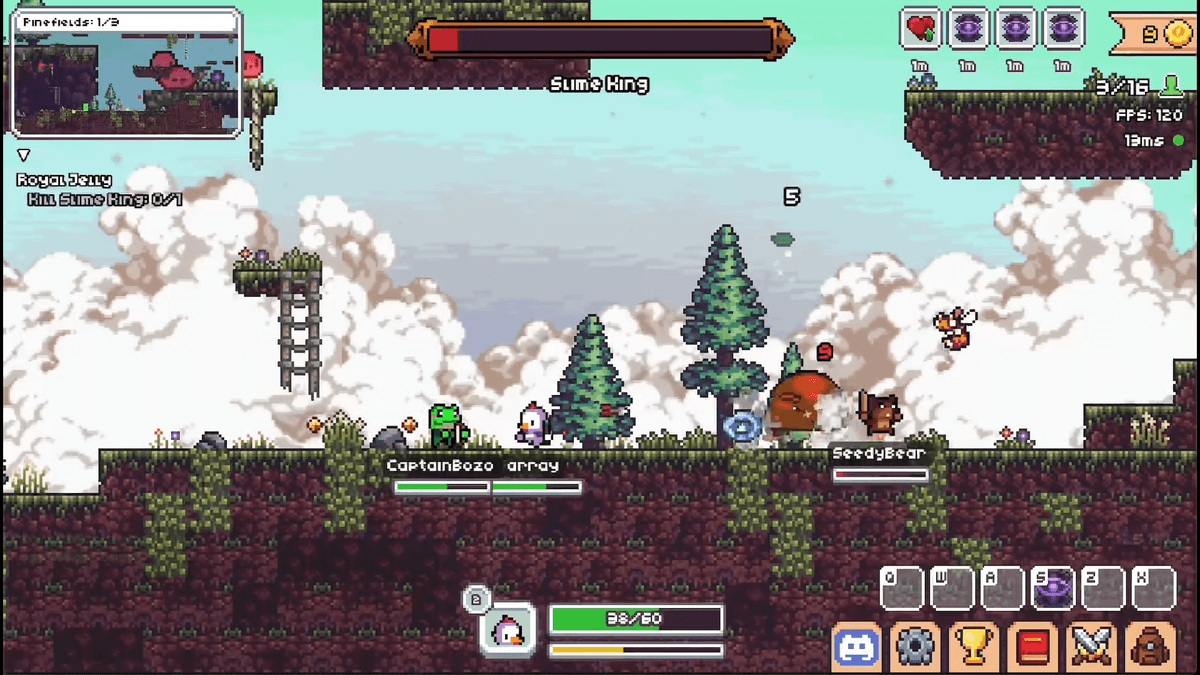
The game’s shared world lets players encounter one another and cooperate against bosses. Equipment determines abilities instead of a fixed class selection. Death removes a character’s equipped gear, while items placed in a vault remain available for future runs. Maps refresh daily, assembled from hand-designed sections rather than generated entirely from scratch.
That structure puts an interesting decision between finding something valuable and using it. Keeping an item with you may help the current run; storing it can support the next one. The journey back to safety can become part of the game’s tension, rather than a pause between the supposedly important encounters.
It also raises practical questions for anyone designing a similar system. Can players understand what they will lose before taking a risk? Does the interface distinguish stored equipment from carried equipment? What happens when someone disconnects at an inconvenient moment? Those details affect whether a setback feels understandable.
The Steam page is the place to follow the game itself. Its presentation emphasises exploration and playing together, which makes it a useful reference when thinking about how to explain a hybrid genre without asking a newcomer to read a design document.
A familiar language on both sides
Vercoe says TypeScript was a major reason for choosing the stack. Phaser handles the client, while Colyseus manages the server simulation and multiplayer state. The project began in February 2026 and has been developed around his regular work.
The broader Colyseus documentation describes the framework’s server-authoritative approach, room management, and state synchronisation. Those responsibilities matter even when the player mostly notices jumping, fighting, and picking up items. Several people need a consistent account of what just happened.
For a first experiment, separate the question of rendering a character from the question of who is allowed to decide its result. A client can present an action promptly while the server checks the shared state. How you reconcile those roles depends on the game, so a small multiplayer test is more useful than assuming a single-player prototype will transfer unchanged.
Our Colyseus 0.16 coverage is an earlier checkpoint in the framework’s development. Use the current documentation when implementing something new, rather than treating an older release article as an installation guide.
A shared world needs shared testing
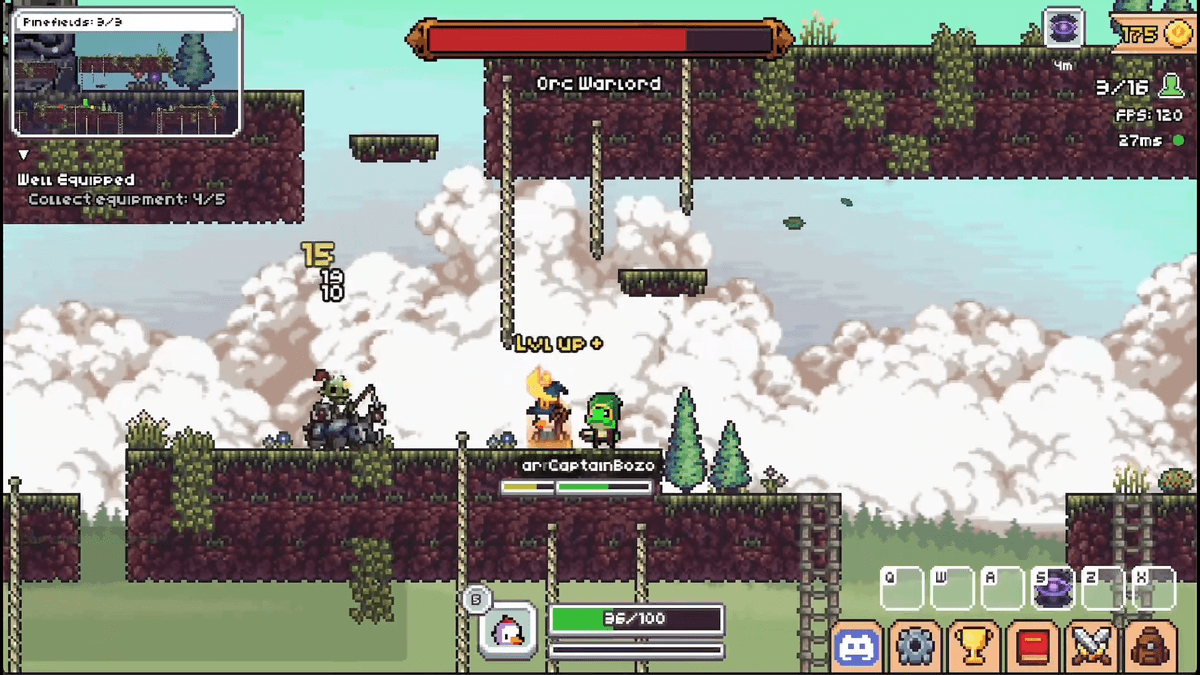
A solo playthrough cannot reveal every multiplayer problem. Ask two people to reach the same object, enter a new area at different times, and leave during an encounter. Repeat with one player on a worse connection. Watch the consequences for both players, including the person whose own connection is working normally.
Be equally specific when collecting design feedback. “The combat feels unfair” is a starting point. Knowing which attack was difficult to read, what equipment was involved, and what the player expected gives you something to investigate. Record that context while the experience is fresh.
Developers interested in a larger starting framework can also revisit Reldens, which combines Phaser and Colyseus with other systems for multiplayer projects. Compare the amount of structure you want to inherit with the amount you want to own.
Follow the next stage
SpringTale’s Steam listing gives December 2026 as its planned release window. The interview also links to a browser demo; check the game’s current links there when planning a play session.
Read the interview alongside the game’s own page for the development background and current plans. For another web-to-desktop story from our archive, The Supernatural Power Troll followed its own route from a Gamedev.js Jam project to Steam.

HTML5 Game Developer, Enclave Games indie studio founder, js13kGames competition creator and Gamedev.js Weekly newsletter publisher. Mozilla Tech Speaker, Gamedev.js community firestarter. Organizes meetups / workshops / hackathons in Poland, passionate about new, Open Web technologies, excited about WebXR and PWAs. Likes eating sushi and playing Neuroshima Hex.