Why a larger 3D download can use less GPU memory
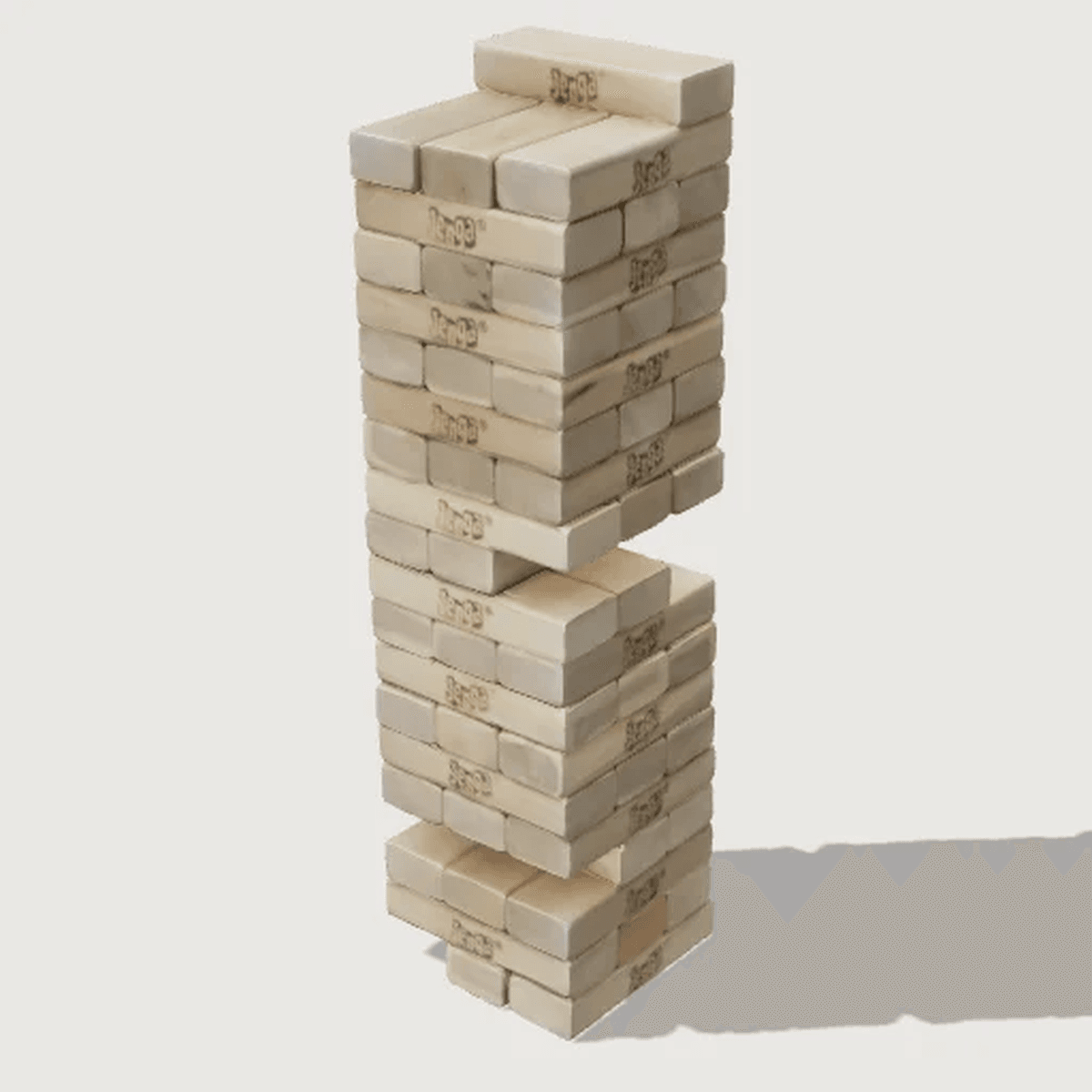
One scan of a wooden Jenga tower makes for a peculiar loading decision. The GLB containing a WebP texture weighs 231,924 bytes. The version with a KTX2 texture weighs 309,316 bytes. Both contain 8,922 triangles and a 2048 × 2048 image. If you were looking only at the Network panel, you’d pick the first file and move on.
We checked the byte lengths, geometry and texture headers in the two downloadable models from CodePawl’s Scanned Objects GLB collection. The difference matters because the bytes crossing the network and the bytes occupied by a texture during play answer different questions. A format that travels well may take up a surprising amount of space after loading.
Follow the texture into memory
Take the WebP route first. A 2048-pixel square contains 4,194,304 pixels. In the dataset author’s test, the WebP texture became an RGBA8 texture, with four bytes per pixel. That puts the largest level alone at 16 MiB. Add the successively smaller levels used for distant views, commonly called mipmaps, and the texture costs about 21.3 MiB. Changing the WebP encoder’s quality setting can shrink the download while leaving that calculation exactly the same.
KTX2 can carry texture data that a loader transcodes into a block-compressed format supported by the device. On the author’s test GPU that format was BC7. A four-by-four block of pixels takes 16 bytes in BC7, so the largest level of the same 2048-pixel texture takes 4 MiB. With the mip chain that comes to roughly 5.3 MiB. These are texture calculations for that format. Geometry and other allocations have their own costs.
The collection’s measurements give the arithmetic some context. Across its test objects, the author reports median texture-plus-geometry allocations of 21.5 MiB for the WebP models and 5.5 MiB for the full-detail KTX2 versions. Those figures came from Chrome on an RTX 3060. A phone may choose a different texture format. Carry the calculation over to your project, then measure what your target device actually uses.
Put the same prop in the same scene
Start with a fixed camera and a single copy of the prop. Load the WebP model, record its size and inspect the edges of the wooden pieces. Then reload the scene with the KTX2 model. Keep the camera, lighting and canvas resolution fixed. Otherwise it’s easy to credit a smaller drawing surface for work that a texture format supposedly saved.
For comparison, we also checked the actual Clue board-game box from the pack. Its full-detail versions contain 4,450 triangles each. Here the WebP GLB comes to 872,836 bytes and the KTX2 GLB to 559,180. The same two encoding choices reverse the download result when the artwork changes.
For Three.js, the collection’s examples configure a meshopt decoder for the geometry. The KTX2 version also needs a KTX2 loader, access to its transcoder files and a check of the renderer’s supported texture formats. Include those files when measuring a cold first visit. If the same decoder serves fifty props, the cost of that first visit and the cost of adding prop number fifty will look rather different.
Now move the tower across the room. At what distance can you still read the gaps between its pieces? At what distance would you notice if the corners were simpler? The collection supplies lower-detail versions, which give you a second lever after choosing the texture format. Pick a switch distance based on a view your player will actually see.
Spend detail where the player looks
A box the player can pick up, rotate and read has a good claim on your texture budget. A dozen boxes on a high shelf have a different job. One sharp nearby label may explain the entire shelf. Keep that distinction in mind when moving a model from a viewer, where it fills the screen, into a game where it occupies a handful of pixels. The central instrument and surrounding scenery in Songs of Hyrule make a useful example of that difference in attention.
For another extreme, look at the scenery generated in Panzercorn. A small ZIP, an affordable first frame and enough detail to read a scene are three separate achievements. Measuring each gives you a much better chance of keeping the one your game needs most.

HTML5 Game Developer, Enclave Games indie studio founder, js13kGames competition creator and Gamedev.js Weekly newsletter publisher. Mozilla Tech Speaker, Gamedev.js community firestarter. Organizes meetups / workshops / hackathons in Poland, passionate about new, Open Web technologies, excited about WebXR and PWAs. Likes eating sushi and playing Neuroshima Hex.