How Panzercorn fit hand-tracked VR into 13,309 bytes
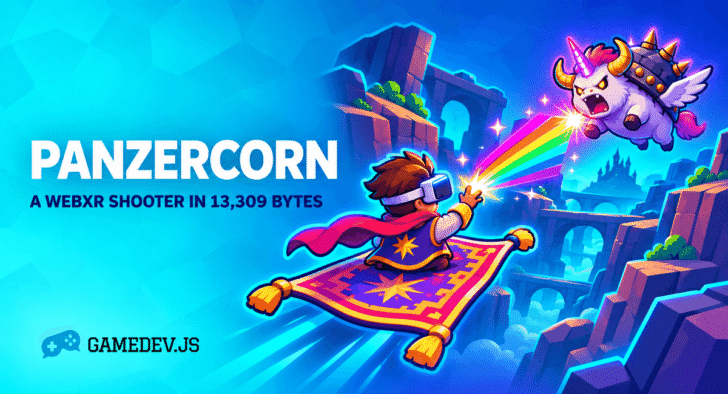
Close your right hand, line up a horned creature, then open your fist. A rainbow beam flies off the magic carpet. Meanwhile your left hand is busy steering it through a valley. That is Chris Subagio’s starting point for Panzercorn, the runner-up in our js13kGames 2026 winners roundup.
The published game archive comes to 13,309 bytes. Open it and there is one file, index.html. The file itself is 17,456 bytes when unpacked. That leaves three bytes of headroom under the competition’s 13,312-byte limit and makes the input system a particularly good place to start exploring the game.
Make the release of a button count
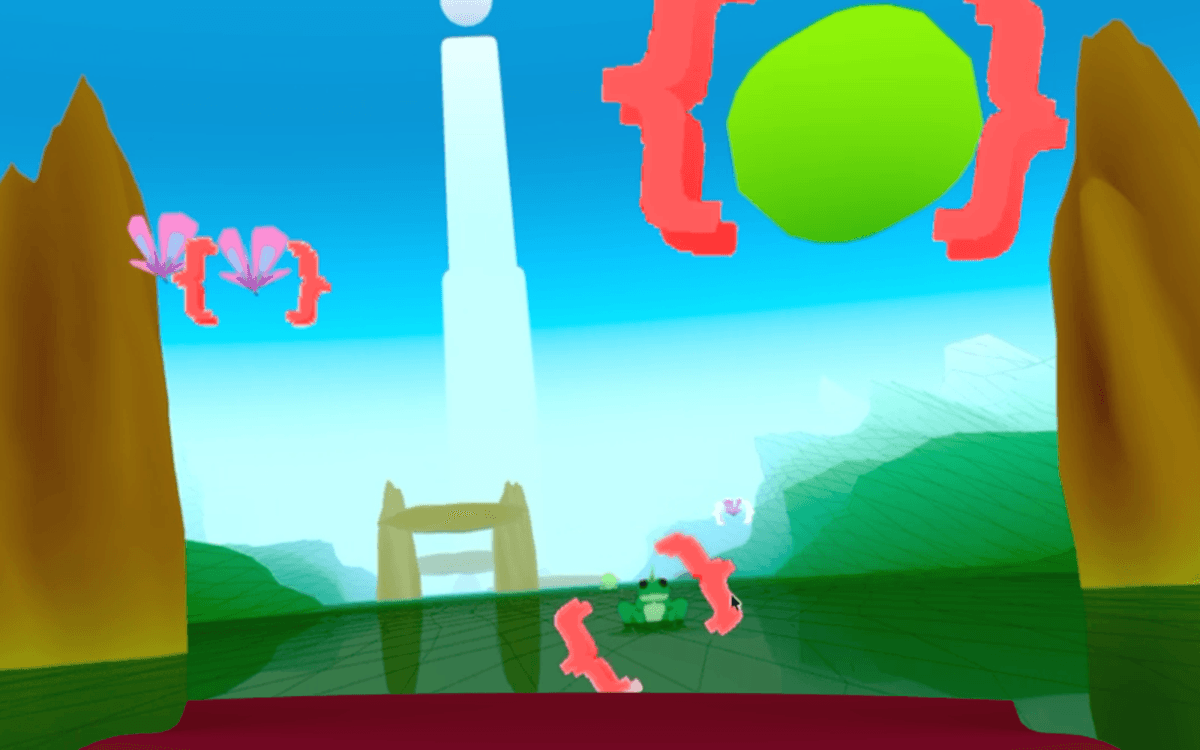
The weapon has a winding-up phase. You can acquire several targets while aiming and release a volley when you’re ready. That gives the player a decision during what might otherwise be dead time between shots. Do you let the current target go by while reaching for a bigger group? The game can reward patience without adding a second weapon, an inventory or an upgrade menu.
Subagio describes tilting the left hand like a little aeroplane to steer, and using the right fist to acquire and release targets. A headset with controllers uses the stick and trigger instead. On desktop the same action maps to holding, aiming and releasing the mouse. On a touchscreen a drag and lift perform the job. The fingertips change, but all four versions have a point at which a shot is committed.
There is a small implementation detail worth looking up. The weapon code has space for five target locks. It keeps track of whether the firing action was held on the previous update, so releasing it can have a different meaning from simply having an open hand. That distinction also works for a mouse button. If you are designing a browser game around several inputs, write those two moments down before deciding what any particular device calls them.
Where the picture comes from
The canyon, carpet and enemy silhouettes fill a surprising amount of screen for a one-file game. In his repository notes, Subagio explains how he drives the scene with WebGL and a shared shader program. The program can produce different things depending on which type of object it has been asked to draw. Repeated shapes can use the vertex and instance numbers supplied by WebGL to work out where their pieces belong.
That has a consequence you can see while playing. A long stretch of valley does not have to correspond to a long, individually authored strip of terrain in the download. A rule can produce variation as the carpet advances. The rule, its inputs and enough visual cues to tell a threat from the scenery all have to earn their bytes. A rock only needs as much detail as the player can use while flying past it.
The competition has produced very different answers to that same problem. Samuel van Egmond’s snowy landscape in The King’s Crowns is a lovely comparison. Look at how much information each project spends on the horizon, and how much it keeps close to the player, where an object might actually change the next move.
Count the ZIP that players receive
There is quite a bit of readable TypeScript in the repository. The published build takes it through bundling, minification, custom size tweaks and Roadroller before the final ZIP. Counting characters in the source would miss most of that story. A pleasingly short edit can even make the packed result larger if it breaks a pattern the compressor was taking advantage of.
If you’re curious about one optimisation, keep a copy of a known build, change one thing and weigh the two final archives. Then run the smaller one all the way through its start screen. In a game that supports a headset, mouse and touchscreen, saving a few bytes on input is only a win if the shot still fires on release in each version.
Pick one target first, then try locking onto several. It’s an unusually direct way to feel the design decision behind a game that fits so close to the limit – play Panzercorn now.

HTML5 Game Developer, Enclave Games indie studio founder, js13kGames competition creator and Gamedev.js Weekly newsletter publisher. Mozilla Tech Speaker, Gamedev.js community firestarter. Organizes meetups / workshops / hackathons in Poland, passionate about new, Open Web technologies, excited about WebXR and PWAs. Likes eating sushi and playing Neuroshima Hex.