How SANCTUARY: Iovela turns its cathedral into a weapon
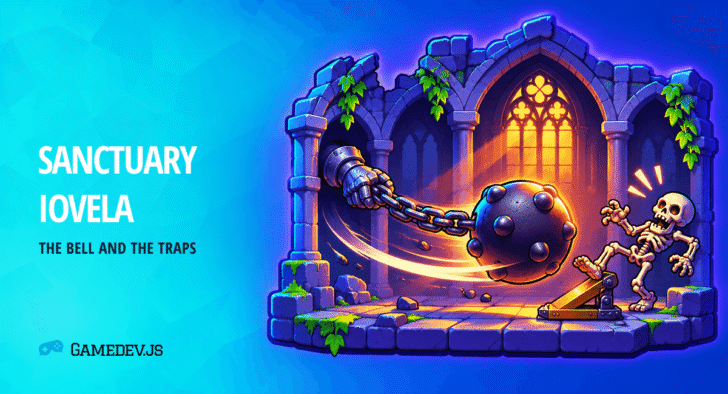
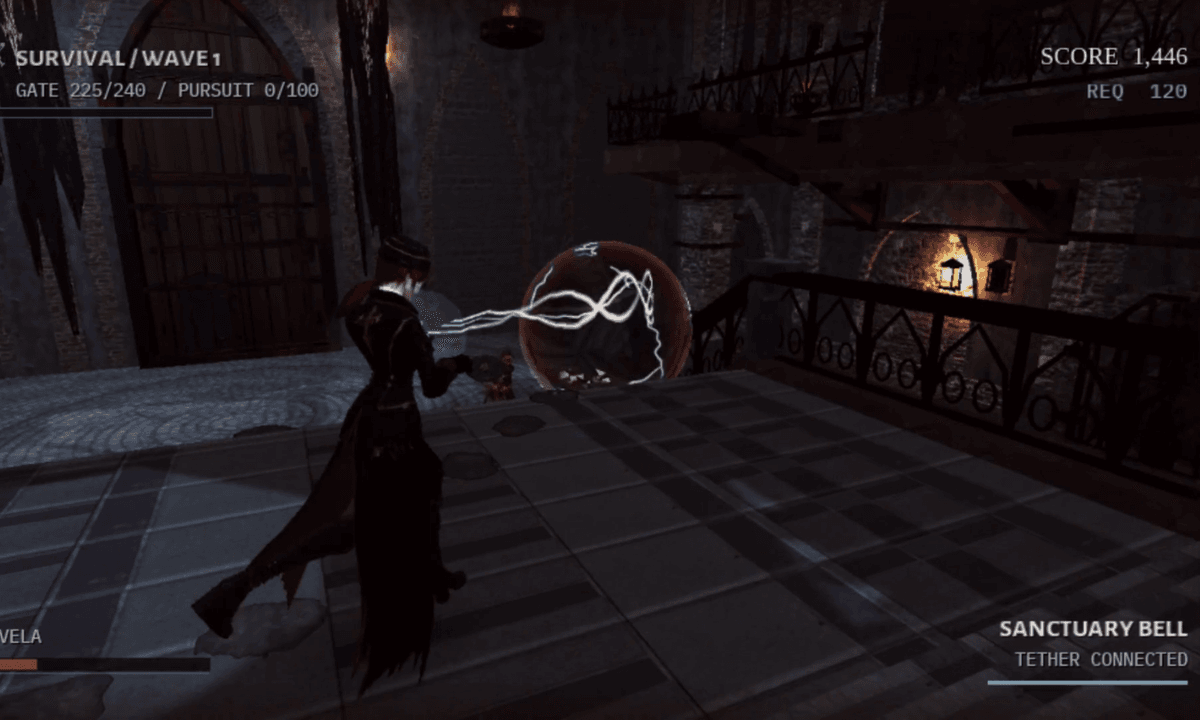
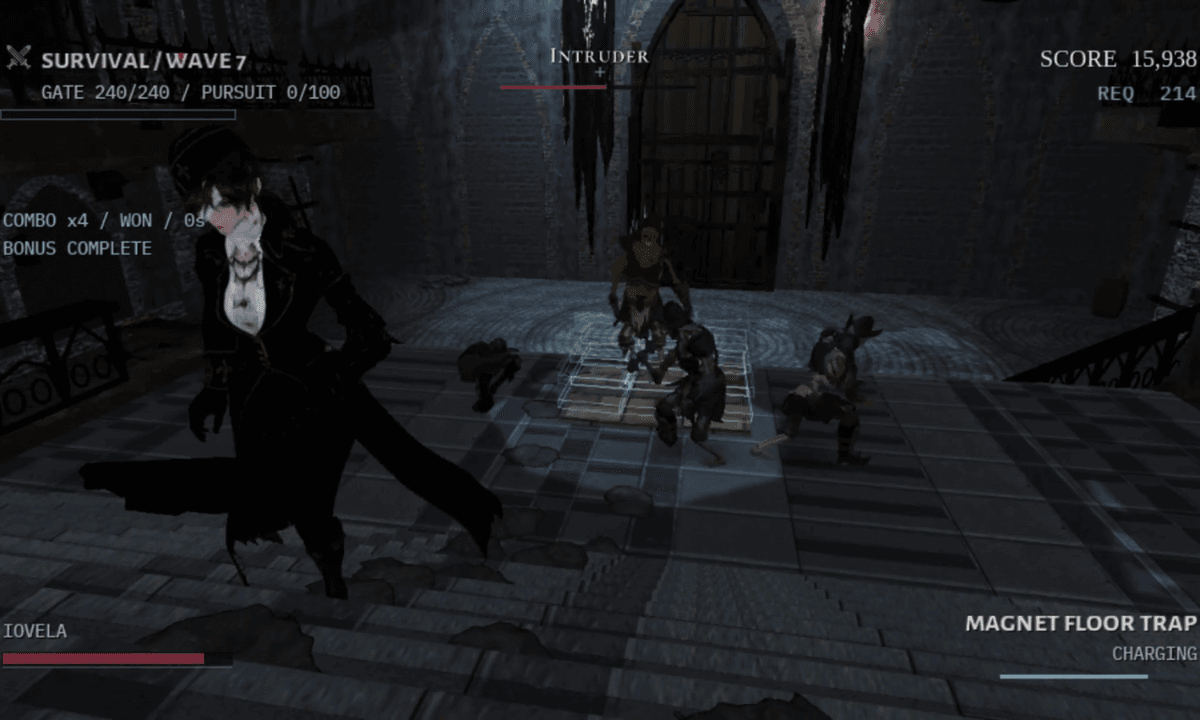
The most interesting weapon in SANCTUARY: Iovela is already hanging in the room when you arrive. The Sanctuary Bell is an enormous iron ball on a chain. Iovela can tether it with her gauntlet, pull it through a group of undead and let it carry that momentum past her. For a player defending a gate, that gives the empty space between two traps a value of its own. You want the enemy standing there when the Bell comes through.
Moiré X Studio built the game for the Bezi Mega Jam’s genre collision theme. Its Phaser 4 and Three.js showcase shows how three kinds of play share one arena. You plan defenses between waves, fight beside them when the undead arrive, and rearrange bodies and debris through physical impacts. All three give you a different reason to care about the same stretch of floor.
Put the second trap where the first one ends
A floor kicker throws an enemy into the air. A swinging ram hits whatever crosses its path. Set those defenses up independently and each can guard a doorway. Line them up and the first trap delivers a target to the second. The choice of placement becomes visible in the direction an enemy travels, which makes a successful combination easy to explain to someone watching.
The Bell adds a moving part the player controls directly. A harpoon can pin an enemy while Iovela lines up the shot. The gameplay clip published by Phaser shows the selected trap changing from a floor trap to a battering ram while the undead are still advancing. A trap that holds someone still also buys the player a moment to turn the camera and see what else is coming.
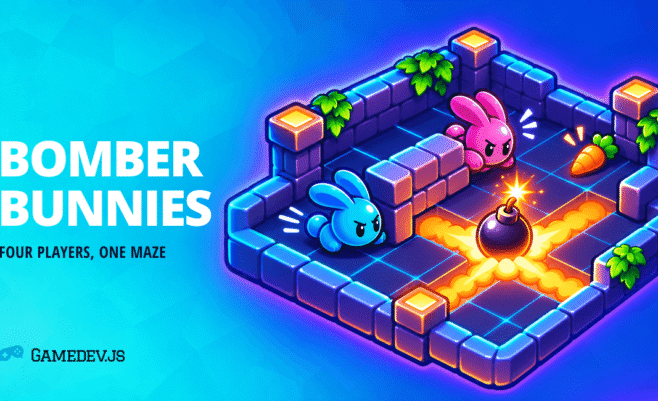
There’s a cousin to this idea in Bomber Bunnies’ maze, where placing a bomb is a decision about the square you’ll need next. A chain of traps asks you to look one hit further ahead. If the kicker sends a skeleton straight past the ram, moving the ram may do more for the defense than upgrading it.
Make one room worth learning
Reusing the cathedral gives players time to remember a good firing angle or a safe place to turn around. Break a balcony and its rubble changes the route through familiar ground. A wave can ask a new question even when the gate, the Bell and the player’s basic controls all stay in place. That’s an appealing way to spend a jam’s limited environment budget.
For a two-person playtest, sketch a gate, a side entrance and a kicker on paper. Let the first person draw the path they expect an enemy to take after the hit. Then let the second person place a ram without seeing the first drawing. If the two marks barely intersect, look at the visual cues before adjusting the physics. A painted stripe, the hinge on a plate or the angle of a piston can teach the outgoing direction before an enemy ever steps on it.
Give failure a readable shape
One way to borrow this for a jam is to build a room with a single reusable projectile and one target. Start the projectile on a short tether. Change the length and watch where the target can safely stand. Our BENNE article describes an adventure authoring tool built on Phaser 4, but its habit of testing one room at a time works just as well for an action puzzle.
For a team taking on Game Off’s Shift theme, try a gate whose defenders can shift a trap between two marked sockets. Give players a way to see where the last hit landed, then let them reposition it between waves. The gratifying moment is when a player moves the ram half a tile, waits for the same enemy to return and knows exactly why the second hit connects.

HTML5 Game Developer, Enclave Games indie studio founder, js13kGames competition creator and Gamedev.js Weekly newsletter publisher. Mozilla Tech Speaker, Gamedev.js community firestarter. Organizes meetups / workshops / hackathons in Poland, passionate about new, Open Web technologies, excited about WebXR and PWAs. Likes eating sushi and playing Neuroshima Hex.